How to Stop Garden Decorations from Rusting

Time:2026-10-18 Author:Ethan
0%

Garden decorations add character to outdoor spaces, but exposed metal can change quickly. Rain settles in tiny seams, morning dew clings to painted surfaces, and wet leaves trap moisture against bases. Within weeks, a once-bright planter may show orange spots around bolts, joints, or scratched edges. Many homeowners ask, “Why are my garden decorations rusting?” The answer is usually a combination of water, oxygen, damaged coatings, and unsuitable metal. Coastal air and lawn fertilizers can speed the process.

Stopping rust begins with careful observation. Check each decoration after rain, especially underneath, where puddles often remain unseen. Gently remove loose rust with a wire brush or abrasive pad, then wash away dust and allow the surface to dry completely. A rust-converting primer may help with stable, lightly affected areas, while badly weakened metal may need replacement. Use an exterior metal paint designed for outdoor exposure, and seal vulnerable seams when appropriate. Product labels matter more than attractive packaging.

Small habits help. Wipe decorations after heavy rain. Keep them above constantly damp soil. Improve drainage around their bases. Inspect them every few months, not only when rust becomes obvious. I have found that rushed preparation causes most coating failures; paint applied over hidden moisture rarely lasts. Still, no treatment is permanent. Sunlight, frost, sprinklers, and accidental scratches will eventually test the finish. This guide explains practical maintenance methods, realistic repair choices, and prevention steps that protect garden decorations without promising perfect, effortless results.
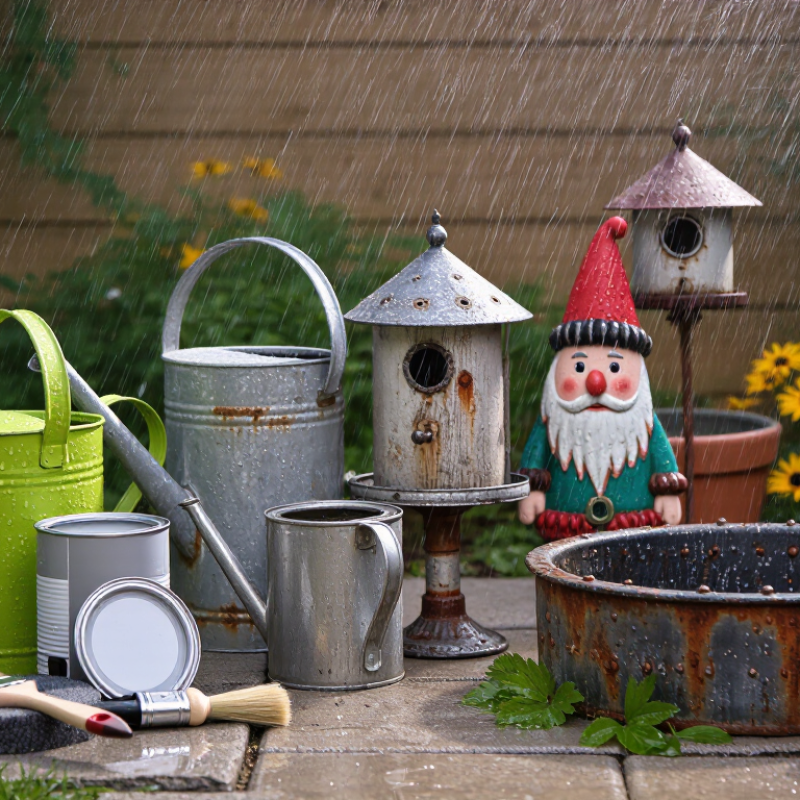
How to Stop Garden Decorations from Rusting

Identify Rust-Prone Metals Using ISO 9223 Corrosivity Categories

How to Stop Garden Decorations from Rusting

Identify Rust-Prone Metals Using ISO 9223 Corrosivity Categories

ISO 9223 helps estimate how aggressively outdoor air can corrode metal. It uses six categories: C1, C2, C3, C4, C5, and CX. C1 means very low corrosivity, while CX indicates extreme exposure. The rating considers humidity, wetness duration, pollution, and airborne salt.

It does not label one metal as “safe” or “unsafe.” Location matters more. A steel ornament beside a swimming pool may corrode faster than the same ornament in a dry inland garden. Coastal air, fertilizer residue, and trapped rainwater create harsh conditions. Check the category that best matches your environment.

Carbon steel and cast iron need the closest attention, especially in C4, C5, and CX areas. Look for orange staining around welds, screw holes, and scratches. Galvanized steel usually offers better protection, but cut edges can still rust. Aluminum resists rust, yet it may pit in salty conditions. Copper forms a patina rather than ordinary red rust.

Use raised supports and keep decorations away from constantly wet soil. Drainage holes matter. Separate dissimilar metals with durable washers to reduce galvanic corrosion.

Repair chipped coatings before moisture reaches bare steel. Clean salt and fertilizer deposits with fresh water, then dry the surface.

Small details help.

I would not rely on a single ISO category for every corner of a garden. Sheltered spaces, shade, and sprinkler spray can create different microclimates. Inspect decorations after rainy seasons, even when the metal initially appears protected.

Remove Rust to SSPC-SP 3 Standards and Dry Surfaces Below 85% RH

Garden decorations rust when moisture remains trapped against bare or damaged metal. A practical repair begins with SSPC-SP 3 power-tool cleaning. This standard requires removing loose rust, mill scale, peeling paint, and other contaminants with powered equipment. It does not demand bright, polished steel. Tightly bonded discoloration may remain.

I once brushed a rusty planter quickly and painted it the same afternoon. The finish failed within weeks. That shortcut was wrong. Use a rotary wire brush, abrasive wheel, or needle scaler suited to the metal thickness. Work around joints, drain holes, and ornament details. These areas often hide reddish powder. Wear eye protection and avoid forcing tools into thin, decorative sections.

After cleaning, remove dust with a clean, dry brush or vacuum. Check the weather before applying any protective coating. A humidity meter should show relative humidity below 85 percent. Also measure the metal temperature and dew point. The surface should remain at least 3°C above the dew point during preparation and coating. Touch alone cannot confirm dryness. It can mislead you.

If condensation appears, stop work. Improve airflow and wait for the surface to dry. Do not seal damp rust beneath a new coating. Inspect the cleaned metal under strong side lighting. Missed rust often appears as dark, rough islands near welds. I still find these spots on supposedly finished pieces. Careful inspection takes minutes, while correcting early coating failure takes much longer.

Apply Zinc-Rich Primer Containing at Least 65% Zinc by Weight

How to Stop Garden Decorations from Rusting

A zinc-rich primer can protect steel garden decorations through sacrificial corrosion control. Choose a product containing at least 65% zinc by weight. Check the technical data sheet carefully. Some labels describe zinc in the wet coating, while others specify the dry film. That difference matters. The dry-film figure usually gives a more meaningful comparison.

Begin by removing loose rust, flaky paint, and dirt with a wire brush or abrasive pad. For heavily corroded surfaces, mechanical cleaning should reach firm, stable metal. Wipe away dust and grease, then let the decoration dry completely. Moisture trapped beneath primer can create hidden corrosion. It looks clean at first. It may not stay that way.

Apply the primer in a thin, even coat within the manufacturer’s temperature and humidity limits. Avoid puddles around seams, feet, and decorative joints. These areas collect water and often rust first. Allow the coating to cure fully before adding a compatible outdoor topcoat. Zinc-rich films can remain vulnerable to abrasion, especially on movable ornaments. I once rushed a second coat, and the surface wrinkled near a sharp edge. That mistake taught me to test a small hidden section first. Inspect the decoration after rain and winter exposure. Touch up chips before bare steel becomes visible. Test carefully.

How to Stop Garden Decorations from Rusting

Standard reduction potentials show why zinc can provide sacrificial protection to iron and steel.

Zinc has a more negative standard reduction potential than iron, so it can corrode preferentially and help protect exposed steel areas. For a zinc-rich primer, choose a formulation containing at least 65% zinc by weight and apply it to clean, dry, properly prepared metal.

Seal with 2-Coat Exterior Paint at 75–125 Microns Dry Film Thickness

How to Stop Garden Decorations from Rusting

Rust begins where water lingers, especially around joints, hollow sections, and chipped edges. I remove loose rust with a wire brush, then smooth sharp flakes with abrasive paper. Grease, soil, and old dust must be washed away before painting. The surface should feel dry and slightly rough, not glossy or oily. I once painted a damp ornament too soon, and small bubbles appeared within days. That mistake was avoidable.

Apply two compatible coats of exterior paint, aiming for a total dry film thickness of 75–125 microns. A wet-film gauge helps control the amount during application, while a dry-film thickness gauge confirms the cured result. Do not assume a heavy coat gives better protection. Excess paint can sag, wrinkle, or remain soft beneath the surface. Allow the first coat to dry according to its technical instructions, then apply the second coat evenly across edges and recessed details.

Thin coats work better.

Paint during a dry, mild period, away from rain, heavy dew, and strong sunlight. Pay close attention to the underside and mounting points, where water often collects unseen. Inspect the decoration after several weeks, not only when rust becomes obvious. If the coating is scratched, clean the exposed metal promptly and repair that area. I still find corners easy to miss, so a small brush and a slow final inspection are worth the extra effort.

Inspect Every 6–12 Months and Repair Coatings Before Rust Spreads

How to Stop Garden Decorations from Rusting

Inspect every garden decoration every 6–12 months, especially after winter or heavy rain. Check joints, welds, screw heads, undersides, and soil-contact points. Look for orange staining, bubbling paint, cracks, and powdery flakes. These small signs often appear before deeper metal damage becomes visible. Do not ignore them. A seasonal inspection can take less than ten minutes, yet it may prevent a full repaint or replacement.

The NACE IMPACT study estimated global corrosion costs at about $2.5 trillion annually, equal to roughly 3.4% of global economic output. It also reported that 15–35% of corrosion costs could be reduced through better prevention and control. For garden décor, prevention means repairing damaged coatings early. Brush away loose rust, wash off salts and dirt, then let the surface dry completely. Apply a compatible corrosion-resistant primer and exterior topcoat. Painting over damp rust usually creates a hidden failure.

Record each inspection with a date and close-up photograph. Pay special attention to shaded areas, where moisture can remain trapped. ISO 12944 highlights surface preparation and correctly selected protective paint systems as key corrosion controls. Still, real gardens are messy. Sprinklers move, coatings age, and repairs are sometimes rushed. If rust returns within months, reassess drainage, trapped water, and coating compatibility rather than adding another layer.

FAQS

What does power-tool cleaning to SSPC-SP 3 standards remove?

It removes loose rust, peeling paint, mill scale, and surface contaminants. Tightly bonded discoloration may remain. It does not create polished steel.

Which tools work for rusty garden decorations?

Use a rotary wire brush, abrasive wheel, or needle scaler. Choose tools suited to the metal thickness. Protect thin ornament details.

How can I check whether the metal is dry enough?

Measure relative humidity with a meter. Keep it below 85 percent. The metal should stay at least 3°C above the dew point. Touch is unreliable.

What should I do if condensation appears?

Stop coating work immediately. Improve airflow and wait until the surface dries. Never trap damp rust beneath fresh paint. That shortcut usually fails.

What should a zinc-rich primer contain?

Choose a primer containing at least 65 percent zinc by weight. Check whether the figure refers to dry film or wet coating. Those numbers are not interchangeable.

How should I apply corrosion-resistant primer?

Apply one thin, even coat within the stated temperature limits. Avoid puddles around seams, feet, and joints. Let the primer cure fully. Then use a compatible outdoor topcoat.

How often should garden decorations be inspected?

Inspect them every 6–12 months. Check after winter, heavy rain, or sprinkler exposure. Examine welds, undersides, screw heads, and soil-contact points. Ten minutes can reveal early damage.

What signs show that rust repair is needed?

Look for orange stains, bubbling paint, cracks, and powdery flakes. Dark, rough spots may hide near welds. Take close-up photographs and record inspection dates. I still miss small areas sometimes.

What should I do when rust returns quickly?

Reassess drainage, trapped water, and coating compatibility. Remove loose rust and clean away salts or dirt. Dry the metal completely before repainting. Adding another layer may not solve the cause.

Conclusion

Why are my garden decorations rusting? The answer is usually prolonged exposure to moisture, humidity, rain, and air, especially when the metal’s corrosion risk is underestimated. Start by identifying the decoration’s metal and assessing its environment with ISO 9223 corrosivity categories. Remove loose rust, dirt, and failing coating to SSPC-SP 3 standards, then ensure the surface is completely dry and the relative humidity is below 85% before painting.

For durable protection, apply a zinc-rich primer containing at least 65% zinc by weight. Follow it with two coats of exterior paint, building a dry film thickness of approximately 75–125 microns. This layered system helps block moisture and slows future corrosion. Inspect each decoration every 6–12 months, paying close attention to scratches, edges, joints, and areas where water collects. Repair damaged coatings promptly, before small rust spots spread beneath the protective layers.

Ethan

Ethan

Ethan is a seasoned marketing professional with a deep expertise in our company's innovative product line. With a passion for sharing knowledge and insights, he takes the lead in regularly updating our corporate blog, where he explores industry trends, product features, and effective marketing......