Root rot is one of the most common reasons container plants decline, yet its early signs are easy to miss. Yellow leaves, soft stems, and a sour smell from the potting mix often appear after serious damage has begun. The question “How to prevent root rot in container plants” deserves more than a simple watering rule. Healthy roots need moisture, oxygen, and space to grow. A container that stays wet for days can quietly remove that balance. Good prevention starts with a pot that has open drainage holes, a suitable growing mix, and a watering schedule based on soil conditions. A calendar cannot replace observation.
Check the top two or three centimeters of soil before watering. If it still feels damp, wait. Lift the container when possible; its weight can reveal moisture better than appearance. Use clean tools when pruning damaged roots, and never place a plant in a decorative pot filled with standing water. Experienced growers still make mistakes, especially when a plant looks thirsty after a hot afternoon. Leaves can droop from heat, not dryness. That difference matters. When repotting, examine the roots gently. Firm, pale roots are usually healthier than dark, mushy ones. Remove decayed sections carefully, then use fresh, well-draining media. No method is perfect. Weather, plant species, container size, and indoor humidity can change the outcome. Careful observation remains the most reliable protection.
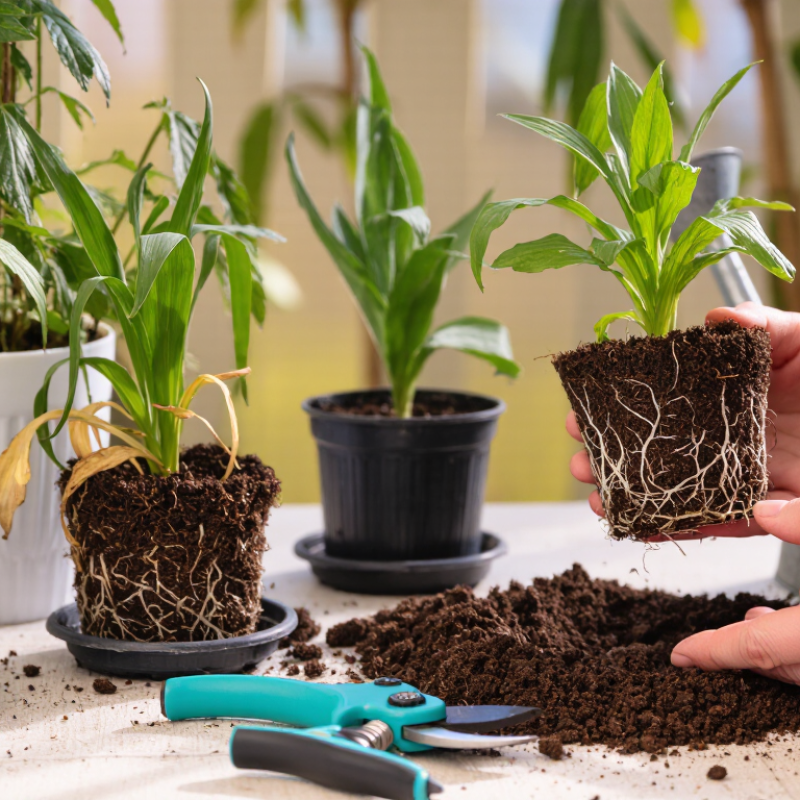
Root rot usually begins when container soil stays wet for too long. Poor drainage, oversized pots, and frequent watering can remove oxygen from the root zone. Cool temperatures and compacted soil may worsen the problem. Fungal and bacterial organisms then attack weakened roots. I have seen healthy-looking plants decline after several cloudy days because moisture never escaped the pot.
Warning signs often appear above the soil first. Leaves may turn pale, yellow, or soft, while growth becomes unusually slow. A serious clue is wilting even when the soil feels wet. Lift the container carefully. A sour smell, dark roots, or roots that feel mushy instead of firm suggest decay. Healthy roots are usually firm and light-colored, though some species naturally have darker roots.
Check moisture several centimeters below the surface before watering again. Use containers with open drainage holes, and never leave them standing in collected water. If rot is suspected, remove the plant and inspect the entire root system. Trim only damaged roots with clean tools, then replace soggy soil with a fresh, airy mixture. Do not reuse contaminated soil. I sometimes water too cautiously after treating rot, and that can stress the plant as well. Recovery requires balanced moisture, gentle light, and patience.
Root rot often begins below the surface, where wet soil hides damaged roots. In container plants, the pot and growing medium control every drop of water. I once lost a young citrus plant in a handsome pot with no drainage hole. The leaves looked thirsty, so I watered again. That mistake taught me to inspect the container before treating the plant.
Choose a container with at least one open drainage hole, and match its size to the root ball. An oversized pot holds unused growing media that stays wet for days. A pot only slightly wider than the roots usually dries more evenly. Use a saucer, but empty it after watering. Decorative outer pots can trap runoff against the base. Material also matters. Unglazed clay allows faster evaporation, while plastic retains moisture longer. Neither is automatically better. Your room temperature, light, and watering habits decide the balance.
Use a porous, stable growing medium rather than dense garden soil. A practical mix may contain fine bark, coir, and a mineral component such as perlite or pumice. The exact ratio needs adjustment. In a cool, dim room, add more drainage material. In a bright, dry room, retain slightly more moisture. Test the mix with a wooden stick. It should feel damp, not muddy, several centimeters below the surface. If water pools on top, the particles may be compacted. Repotting can help, but disturbing healthy roots too often creates stress. I still check drainage after every repot, because “well-draining” is not a permanent condition.
Root rot often begins when container soil stays wet for too long. In my container garden, I check moisture before reaching for the watering can. I press one finger two centimeters into the soil. If it feels cool and damp, I wait. A dry surface alone does not prove the roots need water.
When the upper layer feels dry, I water slowly until a little drains from the bottom holes. This helps moisten the entire root zone instead of creating dry pockets. I empty the saucer after about ten minutes. Standing water can keep roots oxygen-starved. Containers also need drainage holes, and the pot should match the plant’s size. An oversized pot may hold unused moisture around small roots.
Watering schedules should change with weather, light, and plant growth. A sunny balcony may dry a pot in one day, while a shaded room may need several days. I sometimes water too soon when the leaves look slightly tired. That mistake taught me to inspect the soil and roots, not just the foliage. Yellow leaves can mean excess water, but they can also reflect poor light or nutrient stress. Check more than one clue. A simple moisture meter may help, though it should not replace touch and observation. Loose, airy potting soil usually drains better than compact garden soil in containers.
Root rot usually begins below the surface. Constantly wet growing media removes oxygen from the root zone. Damaged roots then become vulnerable to fungal and oomycete pathogens. Improving drainage starts with a container that has open drainage holes, not a decorative pot holding trapped water. Use a porous, well-structured medium with air spaces. Avoid compacted garden soil in containers. In hands-on container care, I still check moisture by lifting the pot. My intuition is unreliable. The top layer can look dry while the lower roots remain saturated.
Airflow also matters. Leave space between pots, remove dead leaves, and avoid crowding plants against walls. Better ventilation helps foliage dry faster and reduces persistently humid conditions. The U.S. Environmental Protection Agency reports that outdoor irrigation uses nearly 9 billion gallons of water daily in the United States. That figure is not container-specific, but it shows how easily watering becomes excessive. The USDA’s 2022 Census of Horticultural Specialties recorded about $18.3 billion in U.S. horticultural sales, making reliable container care an important professional concern.
Tips: Water only when the root zone needs it. Empty saucers after heavy watering. Choose a pot with drainage holes. Check roots every few months; healthy roots are usually firm and pale, while dark, soft roots need prompt attention. Do not add gravel beneath the medium. It can raise the saturated layer instead of improving drainage. Test one container first. Conditions vary.
Root rot often begins beneath the soil, before visible damage appears. When leaves droop while the soil remains wet, inspect the roots. Healthy roots feel firm and look cream, white, or light tan. Diseased roots may appear brown, black, soft, or smell sour.
Treatment requires patience and clean tools. Isolate the affected plant from other containers. Remove it gently, then rinse away loose soil with lukewarm water. Trim every mushy root with disinfected scissors. Keep the firm roots. Discard the old soil, clean the container, and repot the plant in fresh, airy soil. Choose a pot with drainage holes, not one much larger than the root ball. Water lightly after repotting. Avoid fertilizer until new growth appears. Fungicides cannot restore roots that have already died.
Prevention depends on changing the watering habit. Check the top two to four centimeters of soil before watering again. A finger test works, though it is not perfect. Empty the saucer after heavy watering. Place the container where it receives suitable light and gentle airflow. Crowded, dim conditions slow evaporation and increase risk. I once watered a recovering plant on a fixed schedule, and the problem returned. That mistake taught me to watch the soil, weather, and leaf condition instead. Inspect roots during seasonal repotting, and clean tools before handling another plant. Expect some leaf loss after treatment. Recovery is gradual.
Root rot often starts when soil stays wet too long. Poor drainage, large pots, frequent watering, cool temperatures, and compacted soil reduce oxygen around roots.
Leaves may become pale, yellow, soft, or unusually limp. Growth may slow. Wilting while the soil remains wet is a serious clue.
Lift the container carefully and smell the soil. A sour odor, dark roots, or mushy roots may indicate decay. Healthy roots are usually firm and light-colored.
Check several centimeters below the surface. Water only when that area feels partly dry. The surface can look dry while lower soil remains saturated.
Choose a pot with at least one open drainage hole. Match its size closely to the root ball. Oversized pots can hold wet soil for days.
Unglazed clay usually allows faster evaporation. Plastic retains moisture longer. Neither material is always better. Room light and temperature still matter.
Use a porous, stable mixture with air spaces. Fine bark, coir, and perlite or pumice can work well. Dense garden soil often stays too wet.
Remove the plant and inspect the complete root system. Trim only damaged roots with clean tools. Replace soggy soil with fresh, airy material. Do not reuse contaminated soil.
Leave space between containers and keep plants away from crowded walls. Empty saucers after watering. Trapped runoff keeps the lower soil wet.
Usually, no. Gravel can raise the saturated layer instead of removing excess water. Test one container carefully. Conditions vary, and my intuition is not always reliable.
Root rot is a common problem in container plants, usually caused by excess moisture, poor drainage, and limited airflow around the roots. Early warning signs include yellowing leaves, wilting despite wet soil, slow growth, and dark, soft, or unpleasant-smelling roots. To understand how to prevent root rot in container plants, choose containers with adequate drainage holes and use a loose, well-draining growing medium that allows both water movement and air circulation.
Water plants only when the upper layer of soil begins to dry, and empty any standing water from trays or saucers. Place containers where they receive suitable light and airflow, while avoiding overcrowding and consistently damp conditions. If root rot appears, remove the plant carefully, trim away damaged roots with clean tools, and repot it in fresh, dry medium. Adjust the watering routine afterward and regularly check the roots, soil moisture, and container drainage to help prevent the problem from returning.

Snax Garden